
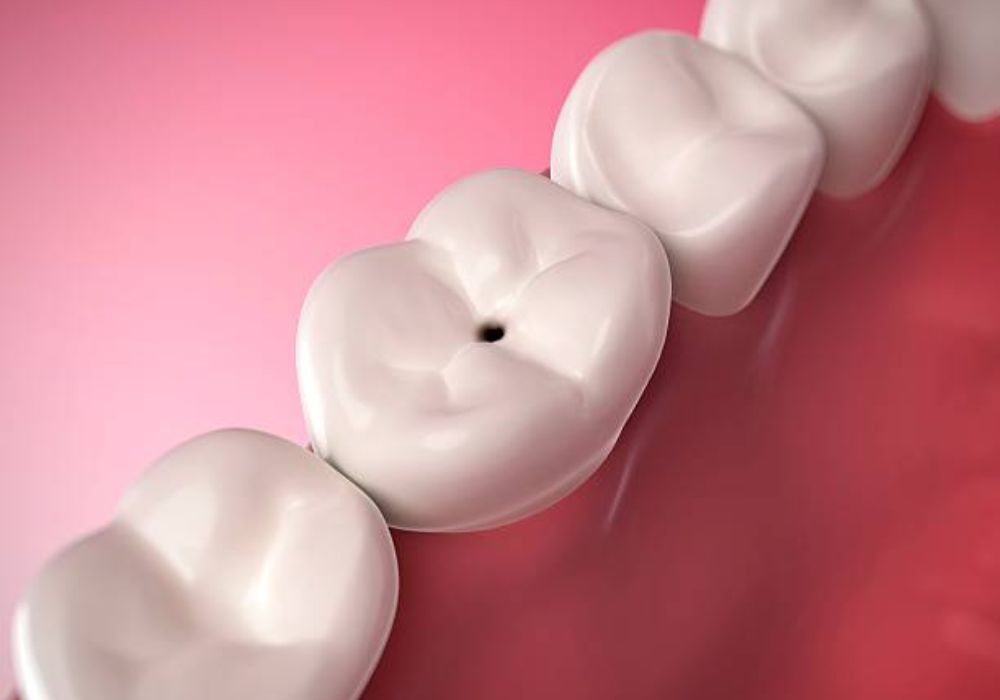
I want to tell you how to reverse a cavity at home by yourself very easily if you know what to do. So, if you have a dentist telling you they’ve never seen it happen, well, they’ve never used my system and my strategies. And if you’ve heard people say, “No, no, you can’t reverse decay into dentin,” that is inaccurate. I have seen it. I’ve seen it in multiple teeth. It will occur. Prove it for yourself.
What Causes Cavities?
Before we can begin talking about what to do, let’s talk about what actually makes a cavity happen. What forms a cavity? Cavities form in your mouth because they don’t suddenly occur. They’re not like a blister on your foot. Most people have no idea why cavities form. They think if they have a filling, that’s the end of the story, and it absolutely is not. You see, a cavity begins only in a tooth that’s lost its strength — it’s lost enamel.
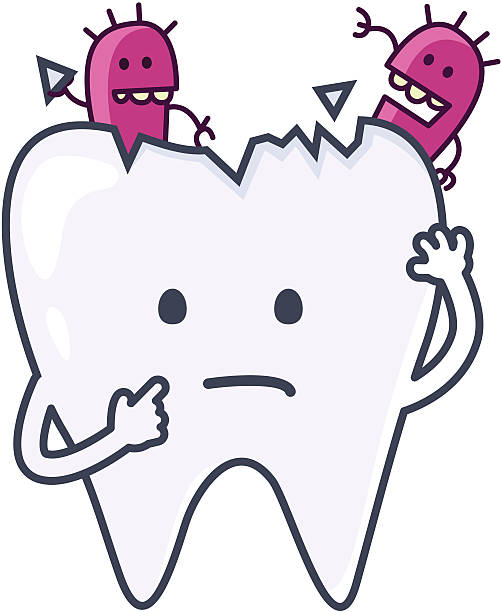
Tooth enamel is kind of like a skeleton, a structure like a honeycomb packed with minerals in between all of the spaces. And the problems begin when you lose those minerals from those spaces. You lose them because they get dissolved out of your tooth enamel by any kind of acidity. It can be acidity from foods, from eating, from snacking, from all kinds of things, including the acids produced by bacteria. And that’s where all of this is going to come together.
The Process of Demineralization
So, the first stage of a cavity — the beginning of a cavity — begins with what we call in dentistry demineralization: the removal of minerals from the outside of your teeth. And when this occurs, it opens up holes, little spaces. And the problem with that is because plaque actually enters those spaces. Now, what is plaque? You may have heard of plaque and thought it’s a thing, but it isn’t. It begins with a certain group of bacteria, a really bad kind of bacteria in the bacterial world. And the most famous of these bad bacteria is Streptococcus mutans.
You may have heard about Streptococcus mutans; it’s famous because it processes sugar in your mouth. Now, that’s sugar from all kinds of sources: whether it’s natural sugars or sugar from cakes, pastries, and things that you eat made with sugar. It can even be from sugars in fruits. Any kind of sugar — even a tiny amount — will feed Streptococcus mutans. And when Streptococcus mutans gets some sugar, it has energy now. In floating in your saliva, Streptococcus mutans cannot reproduce. But the problem with Streptococcus mutans is when it has energy, it makes little strands of sticky tendrils. That allows Streptococcus mutans to stick to your tooth.
The Formation of Plaque and Its Effects
Once Streptococcus mutans has attached to your tooth, it can get friends together and clump into this mass. We’ll talk about how the plaque forms in another video. But basically, it gets thicker and more massive. This mass of plaque multiplies, and as it multiplies, the byproduct is acidity. So guess where these acids go? Into your tooth to cause more demineralization.
The bacteria go into that open hole, do the same thing again, cause more demineralization, go further in, and so it goes. This progressive, destructive process goes on and on. The mass of these bad bacteria — Streptococcus mutans mixed up with the acidity and the decayed part of your tooth — is what dentists will call caries (C-A-R-I-E-S). So, caries is actually a kind of material made up of the bacteria that caused it to occur and the damage to the tooth. It is, in fact, a kind of infection.
What Happens if the Infection Continues?
Now, if this infection — the progression of a cavity — continues unchecked, eventually it will undermine the strength of your tooth. And eventually, that tooth will cave in. It hasn’t got the structure to support it anymore. And that caving in creates what we call a cavity. So, a cavity isn’t the infection. It isn’t caries; it’s actually the symptom. It’s the last stage of this infection.
And I think that’s really important to differentiate because when we talk about how to stop a cavity, the best time to stop it, of course, is right at the beginning — long before it caves in. I’m going to say here: if you already can see a hole in your tooth, it doesn’t mean don’t listen. Even if you’ve got a hole in your tooth, and even if what I tell you next isn’t going to make that hole disappear (which it probably won’t, especially if it’s a giant hole), everything I tell you will strengthen the surrounding enamel.
This will make any kind of filling, crown, or any treatment easier for your dentist. It will clean up and stop this process so it won’t go any deeper. It won’t keep channeling closer and closer to the nerve inside your tooth. So, you will end the disease process and you will harden up the actual caries — this soft, mushy stuff. Once the infection’s gone, and when you use the techniques that I recommend, it will harden up and be much easier for the dentist to remove cleanly and completely. That way, it won’t necessarily cause as much damage to the tooth or even to the nerve inside the tooth.
So, it’s worthwhile trying to control a cavity even if you think you will eventually need a filling. Many people do, but on the other hand, many people don’t. The myth that’s out there currently is that once caries is into the dentin, you can’t stop it. And I will say to you right now: if you follow my instructions, my recommendations, this goes far deeper than the normal recommendations. You can and probably will be able to stop caries into the dentin, provided it hasn’t caused a giant cavity to already have formed.
Understanding the Difference Between Infection and Cavity
I hope now that’s clearer — the difference between the infection (the caries) and the cavity. So, how do you stop a cavity when it starts? How do you stop that infection?
Steps to Reverse a Cavity
Limiting Sugar Intake
The first thing we have to do is actually limit sugar. This will limit plaque from forming in the first place, which will stop future problems.
Stopping the Infection and Healing the Enamel
The second thing we have to do is actually stop this infection that’s already started in your tooth. And the way we do this is to actually help the outside surface of the enamel heal itself. And in order to do this, we have to stop that acidic damage and we have to increase the amount of minerals available for the enamel to repair itself.
Now, enamel isn’t alive. Enamel is a crystalline form. And crystals, as you know, if you’ve done an experiment at school, you may have grown crystals in a Petri dish in your science class. What occurs is that once there’s a crystal, it can add to itself, providing the liquid around it is at the correct acidity or pH, and that the solution around it is absolutely packed with minerals.
The Role of Saliva in Remineralization
This is where your saliva — the liquid in your mouth — is the miracle worker. Because saliva is dripping, it’s super-saturated with the very minerals that your teeth need to repair the outside enamel.
So, all you really have to do is give your mouth adequate time to interact with the saliva in your mouth. Now, the problem comes for people who have saliva flow that’s the wrong pH. And what do people do who have a dry mouth? Maybe you’ve had your salivary glands removed, or they didn’t form properly, or you have a disease that took out your saliva, or you’re taking medications that dry it up.
This is where xylitol is your ally. You see, xylitol, whatever your problems are, will stimulate a flow of mineral-dense saliva — that spit in your mouth — and it will come into your mouth at the right pH and full of these minerals to repair this outside casing or coating on the surface of your teeth.
Using Fluoride to Speed up the Process
You can speed this process of mineralization for sure, and the way you do that is using the right kind of fluoridated toothpaste and mouth rinses. I am very, very specific about the only kind of fluoride I recommend, which is sodium fluoride. The rinses that I recommend are a 0.005 — very, very dilute, very, very insignificant. You may hear dentists wanting to prescribe for you some kind of really strong fluoride, but I highly recommend trying the more dilute first because it appears to be far more effective when you use it two or three times a day.
Don’t use it more, but twice a day should work really well. If you think you have a very dry mouth or you want to use it three times a day, that’s okay. What happens is the fluoride is actually speeding this remineralization process.
How to Speed up Remineralization
This is terrific news because we know from children’s teeth that enamel in children’s teeth, when they erupt — a new permanent molar, and all of this is related only to adult teeth — children’s teeth, we’ll talk about in another video.
But if you want to make a cavity in an adult tooth go away, actually mineralizing this outside casing is the first thing you have to do. And we know that in a child’s tooth, as it comes into the mouth, it has no minerals. It takes a year — 12 months — for that mineralization (it’s called maturation) to occur. This is why a child’s tooth, coming in the mouth, always looks yellow, always looks darker, is really soft, and decays really easily.
The Role of Diet and Oral Hygiene
When we mineralize them with these same techniques — not eating and drinking in between meals, giving your saliva time to mineralize — we can speed a year (which is what it normally takes) to three months simply by rinsing twice a day with a gentle fluoride mouthwash and using the right remineralizing toothpaste. This allows your enamel to regain the minerals it lost over time. The key is consistency in using these strategies. Remember, it’s not just about brushing; it’s about giving your saliva the time and minerals it needs to work.
Now, let’s talk about some other tools you can use at home to help reverse a cavity. Aside from fluoride and xylitol, one powerful addition to your routine can be remineralizing toothpaste that contains hydroxyapatite, a natural mineral found in tooth enamel. Hydroxyapatite toothpaste has shown promise in repairing and remineralizing enamel, and it can be especially helpful in the early stages of tooth decay.
Another thing to consider is oil pulling. This ancient practice involves swishing oil, typically coconut oil, around in your mouth for about 10–15 minutes. Oil pulling helps to remove bacteria from your mouth and promote healthy saliva production, which further aids in the remineralization process.
Consistency is Key
Diet also plays a crucial role. Avoiding sugar and processed foods will prevent harmful bacteria like Streptococcus mutans from thriving. Eating more mineral-rich foods like leafy greens, dairy, and foods high in calcium and phosphorus can help provide the nutrients your enamel needs to stay strong.
Lastly, don’t forget about your daily routine. Regular brushing with a soft-bristled toothbrush and flossing will remove plaque and bacteria that can exacerbate the decay process. Make sure to brush at least twice a day and floss once a day.
By following these steps consistently, you can support the natural remineralization process, giving your enamel the best chance to heal and strengthening your teeth in a way that can potentially reverse early cavities. However, if you have deep decay or advanced cavities, it’s important to consult a dentist for treatment. These at-home strategies are most effective in the early stages of decay.
So, if you’re experiencing early signs of tooth decay, like sensitivity or small white spots on your teeth, don’t wait. Start taking action now to support your enamel and halt the progress of the cavity.